 Chinese
 German
 Spanish
 Japanese
 Korean

What the new Euro NCAP protocols mean for car manufacturers
New Euro NCAP protocols have been announced for cars. Learn how they could affect the way you test ADAS technology.
New Euro NCAP protocols are coming for OEMs in 2026, as well as the details of the new protocols. Given the involvement that many OEMs had in the process of getting to the new protocols, we expect that most of you are already aware of most of the changes – but in this blog we’re covering some of the technical impacts that the changes will have on the way you currently test your ADAS technology.
Change 1: more open road testing will require more robust localisation
We know that the new test protocols are going to put greater emphasis on gathering data from open road scenarios as well as on the test track. The protocol for road sign recognition will require data gathered in the real world, and it’s likely that other protocols will start requiring real-world data soon.
On the open road, GNSS conditions can be a lot more variable than they are on the track. Especially if you are testing features in a city, you will need a positioning solution that can overcome the challenges of weak or non-existent GNSS signal in order to get the data needed to pass each test.
The good news for OXTS users is that our GNSS/INS devices already contain powerful algorithms and technology to maximise the accuracy they get in urban environments, tunnels, and other areas where GNSS signal is patchy or completely blocked. Additional sensors such as wheel speed sensors, radar, and LiDAR can be used to improve localisation accuracy in these environments with ease.
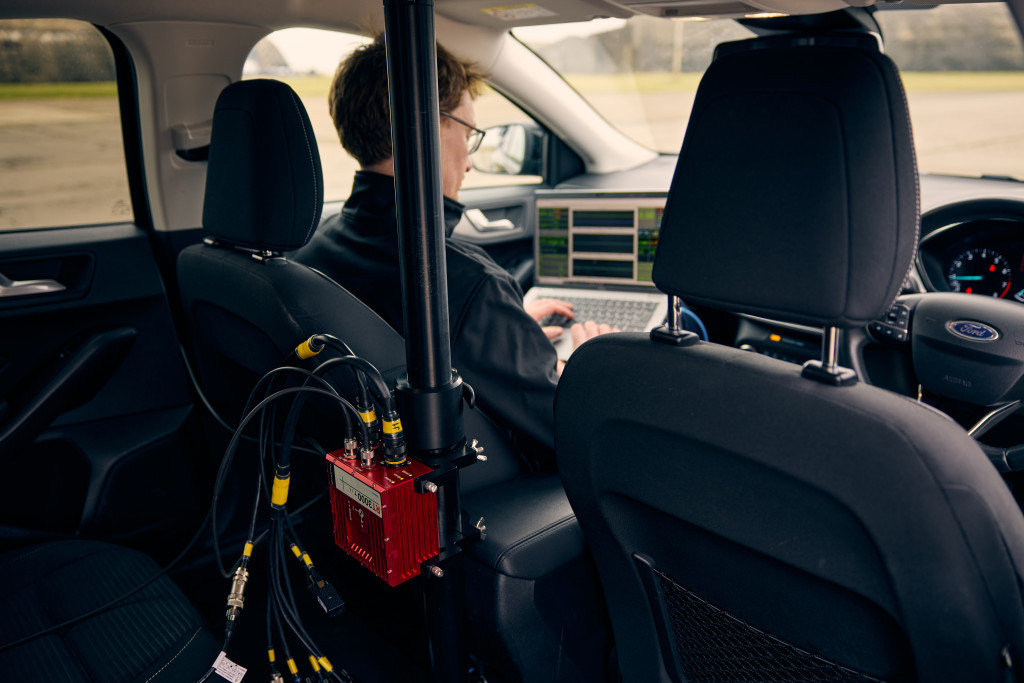
Change 2: driver acceptance might require different test data
During a seminar from CARHS, the example of lane support systems was given as a test protocol that’s being updated to include a driver acceptance score. In a bid to encourage OEMs to produce lane support systems that don’t override the driver’s intentions (steering them back into a pothole they were trying to avoid, for instance), the protocol now requires data such as:
- The ability of the lane support system to adapt its behaviour based on input from the driver state monitor (DSM).
- The length of time the system attempts to override the driver intent.
- The overriding torque required to override the lane support system.
After all, if users turn them off out of frustration, they don’t help anyone.
You will need to make sure that your current setup is capable of measuring these things during a test, to the required level of precision, and ensure that you have a way of logging the data alongside all your other test data.
OXTS provides vehicle dynamics and positioning data for every Euro NCAP accredited test house, meaning that our devices will provide the same level of precision and performance as you can expect from your official Euro NCAP tests. If your current ADAS testing system will leave you with gaps in your test coverage once the new protocols come into effect, talk to us to see if we can help.
Change 3: less room for downtime than ever
Since we’re speaking about tests that involve steering robots, it’s also worth noting that with the increased breadth of tests involving multiple actors there will likely be an increased demand on your steering robots, braking robots, and guided platforms. And, of course, the increase in testing volume will put more pressure on your other test equipment and your proving ground facilities. That’s all going to put even more pressure on test engineers to keep downtime to a minimum.
Given that downtime is mainly caused by the failure of testing hardware (whether that’s an outright mechanical failure or a calibration error), it’s likely that investing in additional hardware will be required to keep pace with testing. At the same time, ensuring that the hardware you do own is as robust as possible, and provides the most reliable data possible, is going to be vital.
With this in mind, it’s worth highlighting our calibration services. At OXTS we recommend you recalibrate your OXTS GNSS/INS every two years for maximum performance and traceability, so if yours is due a calibration, now might be a good time to book it in.
And, of course, if you aren’t yet an OXTS customer, you may be interested to know that our GNSS/INS devices are designed to be as robust as possible, featuring IP65-rated enclosures on many units and advanced calibration techniques designed to maximise performance and repeatability. We’re also compatible with all the industry leading guided platform and steering robot manufacturers, so you can build a setup that’s as robust and reliable as possible. And finally, we’ve designed our systems to be as easy to use as possible, so when your test engineers get behind the wheel, they don’t have to perform complicated operations to ensure that the system is performing as it should.
A positive move for OEMs and road users alike
At OXTS we are excited about the new protocols. We’re passionate about helping our customers create a better world – in this case, a safer road network. At the same time, we’re proud to help our customers create ADAS that provides a smoother and more human experience for drivers than ever before. Best of all, RT-Range is already capable of handling all the new protocols, so existing users won’t need to alter their setup in order to adapt to the change.
If you have any questions or concerns about how your ADAS testing setup will adapt to the new protocols, we’d love to try and help. Just click below to contact us.
Find out more about the RT 3000 v4
When you need robust, out-of-the-box localisation capabilities, the RT3000 v4 gives you survey-grade GNSS positioning with OXTS’ most accurate inertial measurement unit.


